Modular Relief Structure was my very first project
for foundation design and I found that working on this project was very thought
provoking. I had to first figure out whether I wanted to work as a design team
and I decided against it. I really thought because of my limited time it would
be better for me to work by myself to not hinder the person I was teamed with. As
I started this project I went through many ideas as to what exactly would be my
theme, research, and the feeling I wanted to evoke to the viewer. I went from a
Japanese tea garden, to a tea garden, to flowers and finally roses. I was very
much intrigued by the stability of a rose trellis and how it could not only act
as part of the composition but also create structure and balance.
My biggest technical challenge while putting my
project together was the correct supplies to use while making my rose trellis.
My project began to fall apart when I used rubber cement but once I used the
hot glue gun my project came together very nicely. I feel my work represents a beautiful
relief structure with a sense of softness and almost “girlyness” which was the
feeling I wanted to evoke to my audience. I believe by adding the black butterflies
it unified the whole piece with the black trellis and white roses. My projects
environmental plane would be the wall in a home or any personal space.
2. Serial planes sample and curvilinear foam-core sample sculpture
My serial planes sample and curvilinear foam-core
sample sculpture I found to be a little me simple as far as the thought
involved. Unlike working on the order and freedom of the curvilinear foam-core
sample, in the serial planes samples I had to figure out the planes and my use
of space. How many serial planes would I use and I decided to use the
curvilinear planes to play on the negative and positive space of the
rectangular foam core base. The planes in my piece steer the viewer’s eye around
my maquette, especially my first curvilinear one. The vertical maquette showed
to be a little more challenge because planes define volume by their virtue and
shape and my maquette didn’t quite come out exactly the way I expected.
The curvilinear foam-core sample sculpture was more
tied to what I was feeling while doing this project. I wanted a more simplistic
and kind of clean look when it came to my sample. I researched Zaha Hadid’s
architectonic structures she built and the way she used curvilinear shapes in structures
and the repetition with variety it created through her architecture. It
provided change but tied everything together. I wanted to use curves, with
circles, and curvilinear foam core so there was also some repetition with variety.
I planned that the planes in my piece steer the viewer in and out of the planar
space and my intentions were to be able to view it from all sides. I feel my
work projects off of the foam base and create a radial effect on one side while
the other side protrudes right out at the viewer but in a different way in all
directions.
3. Architectonic sculpture with re-purposed materials
The Architectonic sculpture with re-purposed
materials will prove to be the most challenging so far for me because it
combines everything we have learned in class. And one thing I’ve struggled with
in this class is how to incorporate your researched information into my
sculpture. What will be my theme? I researched now what do I do with this
information? How literal should I be? How do I execute and evoke what I want? I
find that my process informs my research and I work a little better that way.
For this project I my interest was piqued by a picture on my wall collage in my
room. It was a model wearing a serial planed peplum top and it directly
correlated to what we were learning in class. At that point I found out just
how much art influences about every aspect of the art world including fashion
design. So I decided to do a symmetrical hat with serial planes and with the repetition
on each plane I’m going to make use of reflective materials and transparency
and the repurposed materials but as of right now I’m concerned with the basic
structure. I feel my piece represents my view on art and my understanding and
execution of it. An artist when they first start out it looks like this big
unknown world that was just discovered and as I go on art will become more understandable
and a little easier but more complex as an artist because I will constantly
want to challenge myself. My hat will be big where the brim is with simple or
interesting serial planes and few appliques but as the hat gets smaller around
the head the hat becomes more complex with the amount of appliques and serial
planes having repetition with variety.
Define in your own words, after reading chapter 3 & 4, in Principles of Three-dimensional Design: 1. Describe interaction and stability in 3-D form. What is the “three plane rule?” Give an example?
Whenever an artist is working with a small scale model that envolves planar construction they begin their ideas as paper studies. While they experiment with the paper studies the process reveals that there are one of three ways that two planar forms can interact with one another. One, two planes can meet at a common edge in which the paper is folded. Second, the an edge of one plane can abut the face of another. Thirdly, two planes can interpenetrate, in which, they pass through one another. with paper studies some structures are free standing while others need more structural stability. The simpliest method is to remember the "three planes rule". A stable structure results when any three planes meets so that each plane interacts with both of the other planes.
Aaron J Starksy, March 4 2013
2. What is an environmental plane and planar structure? Give examples and describe it.
A environmental plane is when any stable planar construction is attached to a surface (third plane). Therefore, if two interacting planes are attached to a wall, tabletop, or pavement of a environment those planes become stable by abutting the third structural plane. Any surface in which a planar structure is mounted is called the ground plane of the structure. The ground plane is a perfect example of environmental planes. Tabletops, ceilings, walls, floors. the surface of the earth, all act as environmental planes.
Rashomon, 1998
3. Define an architectonic form. List three examples given in the reading: (A). (B). (C.)
A architectonic form can be the actual architecture itself and the architectural environment its located in or a planar form created in resemblance or reference to architecture, like furniture and other objects. Features of architectonic shapes include regualr geometric shapes featuring a preponderance of triangles, rectangles, and simple curve like circles. Another, is emphasis on horizontal and vertical orientations relative to gravity and a usually orthogonal placement of elements. Thirdly, the strong contrast between closed (interior) and open(exterior) space with emphasis on the transitions of these two types of spaces.
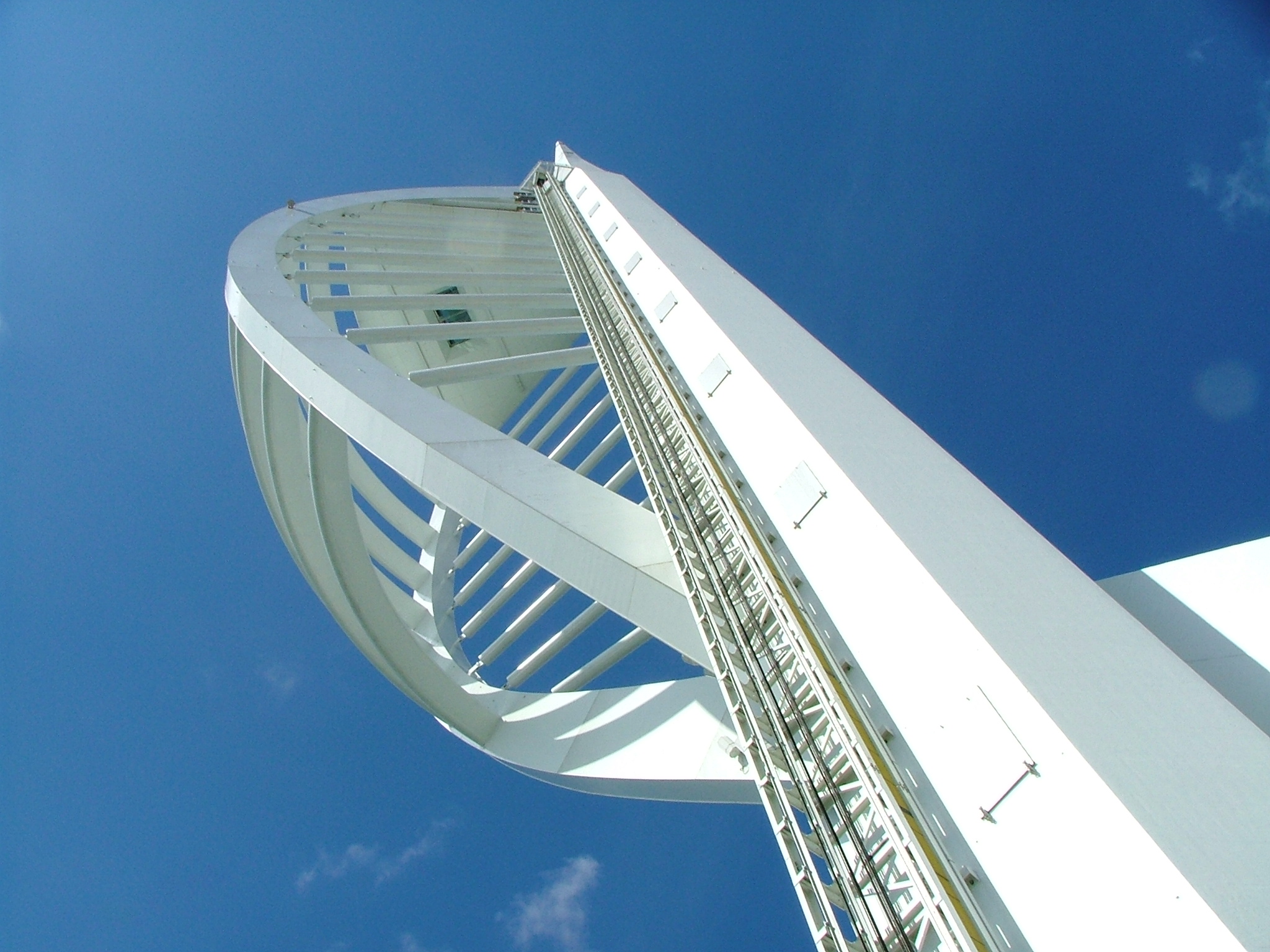
HGP Architects, Portmouth Spinnaker Tower, October 2005
4. How can a reflective surface effect the transition of space?
Reflective surfaces can effect the transition of space by giving off the illusion of open space entering into a closed surface. For example, mirrors in a closed space like a small lobby of a hotel give the illusion of more open interior space than in actuality. Mirrors are widely known to serve as visual transitions for most closed surfaces. Another reflective surface is windows and doors which allow the transition from open to closed space and vnice versa.
Kubler House Architects, Date Unknown
5. How can planes define volume?
Planes can define volume by their virtue or shape. A planes main functions is to shape and activate space. By doing so creating volume in a 3-dimensional world. A plane or planar shape is the very thing that defines space (an empty material).
"Concrete Board Table", Domink Weber and Kevin Rubin, Novemeber 2012
6. Describe the following organizational principles that relate to 3 dimensional forms:
(Give your own visual examples)
1. Organization
The whole pattern and structure of the design that ties the whole object together in a undestandible matter. Directly correlates with the purposes, meaning and function that the design will serve.
2. Synergy
Is a term used to describe the unpredictable capabilities that can emerge in an organization whose individual elements seem relatively unimpressive on their own.
"The whole is greater than the some of its parts"
3. Order and freedom
Order is a natural human trait and artists greatest obstacle is feeling inclined to be overly orderly. As well as freedom; too much of it as well as variety can jeopardize a composition. The trick is to find a combination of order and freedom, unity and richness, and in choosing which to emphasize to achieve ones goals.
4. Structure and unity
In order to create a structure that is unified there has to be organizational devices. One is a systematic structure and the other a intuitive structure. A systemtic structure relies on a more formalized and mathematical applications of unifying principles. While intuituive structures relies on the viewers psychological experience of the visual interplay of elements to show a composition with a sense of order.
5. Symmetry
Symmetry in reference to three-dimensionality there are three different froms, mirror (or bilateral) symmetry, plane of symmetry, and radial symmetry. Mirror symmetry is the most commonly used one because it is refernce to the human body and is defined as when one half of a composition is repeated by its refelection in the other half. Plane symmetry is any plane that divides an object into two mirrored halves. Radial symmetry in three dimensions consists of repeated forms that may be radial from a central axis.
6. Repetition within variety
Repitition of the same or similar elements shows order in a composition. While variety specifies that the repeated obect can be the same but the actual shape or form can change. Variety of repitition is used to pique interest. Repeating not just the compositional elements but also specific realtionships between these elements show a strong unity.
7. Rhythm and gradation
Rythm and gradation are two important parts of repitition and variety. And they both entail the systematic repitition of the intervals of change.
1. Describe the design process; it’s categories and how it is used as you outline step 1, 2 and 3?
The design process is a way of finding solutions to cultural needs. Step 1 is identifying the problem. By identifying the problem one who is the artist or designer has to address some issues such as recognizing the problem and defining it. By outlining the needs, criteria, requirements, and other limitations it sets the boundaries of the problem. Step 2 in a design process is to generate ideas, which is the most creative step. By generating ideas one has to brainstorm, coming up with ideas in a group to exhaust ideas. Using mental inventory which is a creative way of private ideas alternate to group ideas. Researching to generate ideas is a good way to investigate and uncover new ideas. Lateral thinking in generating ideas is the opposite of "normal thinking". Thumbnail sketches in generating ideas is a quick way to jot down visual ideas. Sketch models in generating ideas are small handy constructions in 3D form. In generating ideas wriiten notations are a way of getting ideas down on paper. Step 3 of the deisgn process is refine and analyze by addressing ideas and dwindling down the most sucessful solutions. Subcategorized as drawings. One being presentaion drawings, viewed by an audience, another is working which is a basic layout of the design. Lastly a model or mock-up which serves as a 3D representaion of the design. 2. Define Three-dimensional form and find a new example using the research links.
A three dimensional form is a object that is point, line, and plane. Point which is the direction in which the object starts and ends. Line is the length or vertical movement of the object. Plane is the horizontal (left to right) the object is placed at. Its all these elements thats help the human mind analyze, define, and structure space.
"Re-formation", Roshannah Badgley, 2012
3. Define Space and find a new example using the research links.
Space is a area of openess. Space is essential to the perception of an object or structure and the use of this space is necessary to control materials into forms. A object in a environment or architecture the space (setting), usually, directly correlates with the meaning of the structure. Space activates and defines form, while from activates and defines space. Without form space is a featureless void.
"Cultural Center of European Studies", Bevk Perovic, Dekleva Gregoric, Ofis, Sadar and Vuga, Vitanje, Slovenia,2013
4. Define Positive and negative space in3-D form, find a new example using the research links.
Positive and negative space is one of the spacial principals in a 3D form. These spacial principlals display how a form takes up a space. Some objects like a structure that are in a space use positive and negative space which allows the viewer to take on a whole new perception. The positive space being the actual, literal object and the form it makes. The negative space is the open area around it and the form, shape, or meaning it takes on in other words empty space can posess form.
"3D Printed Mobius Strip Home", Universe Architecture, 2013
5.Define Direction and find a new example using the research links.Direction is a measures the angle of an element within space and toward other elements in the composition. A dirction of a form is horizontal, vertical, and diagonals. The horizontal and vertical elements adjust to gravity. Diagonals show a sense of movement, unlike, horizontal and vertical, free from gravity. Distortions of the Past; Collaborations for the Future,Randy Grskovic
6. Define Scale and find a new example using the research links. Scale is the size of a form as compared to the space containing it, to another form, or to the human body. Because humans is the main audience of these forms most forms are judged equivalent to ones body. The 3 categories of scale are object, human, and monumental. Object scale is designs that are tangiable and could be controlled in ones hand. Human scale is again a form designed designed with the idea of the average human. Monumental scale is highly elevated to the average human and completely dominates the immediate environment. "Ring of life" monument near completion, Fushun, 2012
7. Define Point of view and frame of reference, and find a new example using the research links.
Point of view is the viewers own physical position in space relative to the forms under view. Frontal p.o.v places the audience directly in front of various forms. It usually means the designer predetermined the p.o.v for the viewer. Full round p.o.v is all views are important and no matter which way or direction the form is viewed it has a meaning. Frame of reference is against which position, direction, and scale are realized. For objects meant to be complacent in a setting space, wall, floors and ceilings are define a 3D frame which one would read the object.
"Round and Round", Bernard Hosey, 2012